
Organ donation is when a person gives an organ to someone who needs a transplant. This may happen when a person’s own organ is no longer working as it should. A transplant can replace a failing organ, help the body work better and, in many cases, save a person’s life.¹
Organ donation can happen after a person dies or, in some cases, while they are still living. After-death donation may allow several organs to be given to different people. Living donation usually involves giving one kidney or a portion of the liver.
The World Health Organization (WHO) recognizes organ transplants as an important part of health care. It also supports fair, safe and ethical donation practices around the world.²
In Oklahoma, LifeShare coordinates the deceased organ donation process. We work with hospitals and transplant centers to honor donor wishes and give people waiting for a transplant another chance at life.
One donor can save up to eight lives through organ donation and help many more people through eye and tissue donation.
What happens to your organs if you’re an organ donor?
Registering as an organ donor means you have made the decision to give others a chance at a transplant after your death, if donation is possible. However, not every organ can be donated in every situation. Medical teams review each person’s health and medical history to decide which organs may be used for transplant.
The organ donation process includes several steps:
1. Patient Assessment
The process begins when a patient has a serious injury or illness and is receiving care in a hospital. The medical team works to save the patient’s life. If the patient cannot recover, organ donation may become an option.
Depending on the situation, death may be declared through brain death or after the heart and breathing have stopped and will not start again. These are two different paths to deceased organ donation.
2. Hospital Calls LifeShare
When a patient meets certain medical conditions, the hospital contacts LifeShare. Our team reviews the patient’s medical information to see if organ donation may be possible.
The hospital team continues to focus on the patient’s care while LifeShare looks at the possibility of donation.
3. Family Discussion
LifeShare works with the hospital team to talk with the patient’s family about organ donation.
If the patient registered as an organ donor, LifeShare helps the family understand their loved one’s decision and what happens next. If the patient did not register, the person legally allowed to make health care decisions may be asked to give permission for donation.
4. Medical Evaluation
LifeShare completes a careful review of the patient’s health and medical history. This includes reviewing test results and other health information to decide which organs may be safe to transplant.
5. Matching
Once donation is approved and the medical review is complete, available organs are matched with people waiting for a transplant.
The national organ matching system looks at several factors, including blood type, organ size, how sick a person is and how well the organ may work for them. Transplant centers review organ offers for their patients.³
6. Surgical Recovery, Preservation and Transport
After death has been declared and all donation requirements have been met, specially trained surgical teams remove the organs that can be donated.
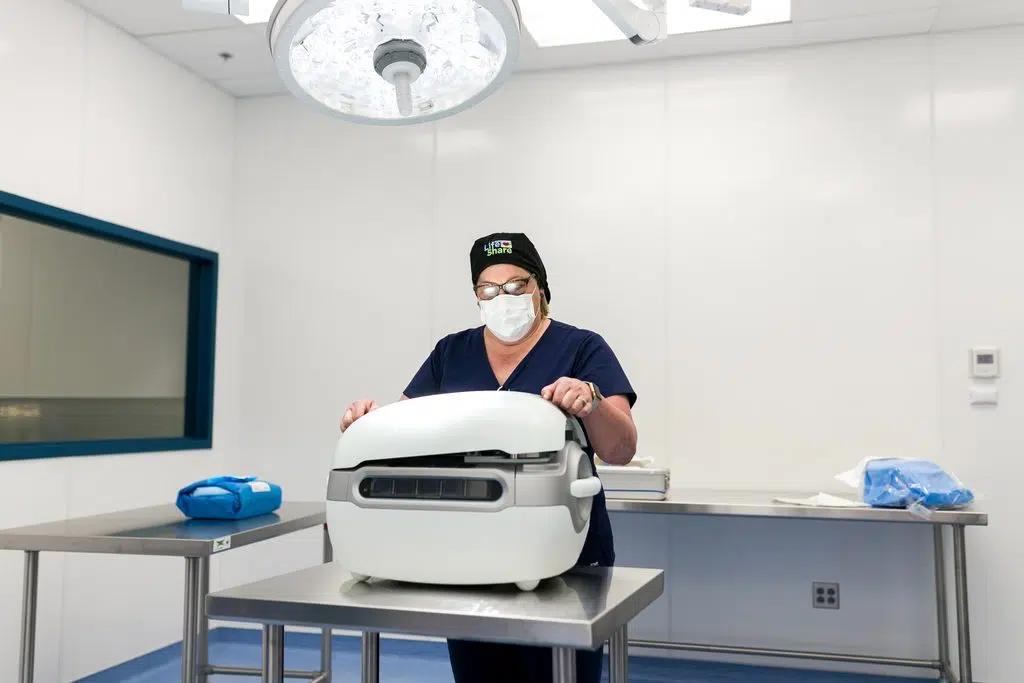
The organs are carefully protected and prepared for transport. In some cases, special machines called perfusion machines help keep organs in good condition before transplant. The organs are then transported to the transplant centers where recipients are waiting.
7. Aftercare
The impact of organ donation continues long after the recovery process.
Through its Aftercare program, LifeShare provides ongoing support to donor families as they grieve and remember their loved one. Families can receive support, learn more about the impact of their loved one’s donation and find comfort in the lives touched by their gift.
For transplant recipients, a donated organ can mean more time with family, new opportunities and the chance to experience life’s special moments.
Throughout this process, the medical team always puts the patient’s care first. Organ donation does not affect how death is determined. The decision to stop life-sustaining treatment is made separately from the donation process.
What are the different types of organ donation?
There are two main types of organ donation: deceased donation and living donation.
Deceased donation happens after a person dies. This can happen after brain death or circulatory death. Living donation happens when a person donates an organ or part of an organ while they are still alive.
Brain Death
Brain death happens when all functions of the brain, including the brainstem, have permanently stopped. It is different from a coma or other conditions where a person is unconscious. Brain death is legally recognized as death in the United States.⁴
After brain death is declared, a ventilator and other medical support may keep oxygen moving through the body. This can help keep organs healthy enough for transplant.
If donation is possible and approved, LifeShare works with the hospital and transplant teams to help recover the organs.
DCD (Donation After Circulatory Death)
Donation after circulatory death, also called DCD, is another way a person can become an organ donor after death.
DCD happens when a person’s heart stops beating and their breathing and blood flow stop permanently.⁵
DCD may be possible when a patient has a serious injury or illness and the decision to stop life-sustaining treatment has already been made. This decision is made separately from organ donation.
If the patient meets the medical requirements and donation is approved, organs may be recovered after death is declared.
Both brain death and DCD can make organ donation possible. The difference is how death is determined.
Learn more: Read our blog about donation after circulatory death to learn more about this type of organ donation.
Living Donation
Living donation happens when a person donates an organ or part of an organ while they are still alive.
The most common type of living donation is kidney donation. A person can live a healthy life with one kidney. Living donors may also donate a portion of their liver because the liver can grow back to its normal size over time.⁶
A living donor may choose to donate to a family member, friend or someone else they know. Some people also choose to donate to someone they have never met. This is called non-directed donation.
People interested in living donation must complete medical tests and other health checks. These help make sure donation is a safe choice for the donor and recipient.
At LifeShare, we take part in the deceased organ recovery process to give donor heroes a chance to leave a lasting legacy. We also support and celebrate living donors. Anyone interested in becoming a living donor should talk with their doctor and a local transplant center.
If you want to help someone you know through living donation, contact the transplant program where that person is listed. If you are interested in donating to someone you do not know, contact a transplant center to ask if they have a non-directed donation program.
Oklahoma resources for learning more about living donation include:
- OU Health Transplant Institute — Living Donor Program
- Ascension St. John Kidney Transplant Center
- INTEGRIS Health Nazih Zuhdi Transplant Institute — Living Donor Kidney
- National Kidney Donation Organization for more information about becoming a living kidney donor.
Explain the difference between living and deceased organ donation.
The main difference between living and deceased organ donation is when the donation happens.
Deceased organ donation happens after a person dies. Depending on the situation, death is determined through brain death or circulatory death (DCD). Once death is declared, organs that are safe for transplant may be recovered and given to people who need them.
Living organ donation happens when a person gives an organ or part of an organ while they are still alive. The most common types are kidney and partial liver donation. A person can live with one healthy kidney, and the liver can grow back after a portion is removed.⁶
Both types of donation can save lives, but the process is different. Living donation includes medical checks to protect the health of both the donor and recipient. Deceased donation focuses on honoring the donor’s wishes, supporting their family and recovering organs after death has been declared.
LifeShare coordinates deceased organ donation throughout Oklahoma. We also recognize the generosity of living donors and encourage anyone interested in living donation to contact a transplant center directly.
What are the organs that can be donated?
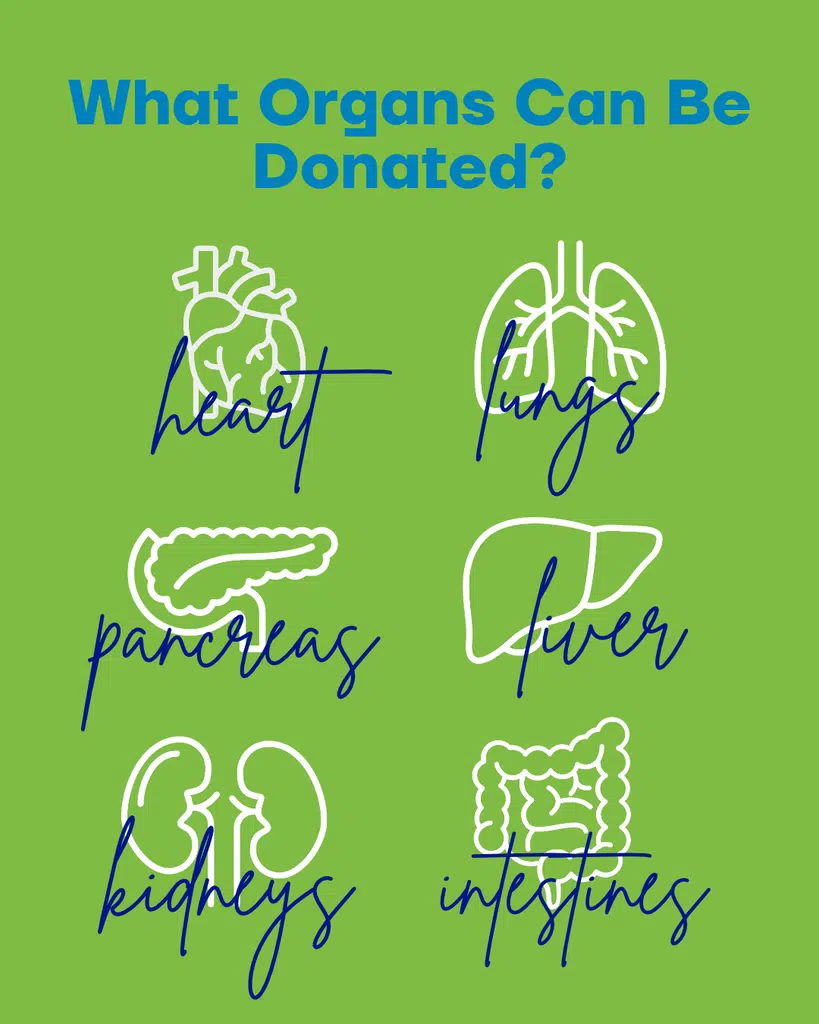
Several organs can be donated and transplanted to help people with serious health conditions.
- Kidneys: Help clean the blood by removing waste and extra fluid. A kidney transplant can help someone whose kidneys no longer work properly.
- Liver: Helps the body process food, remove harmful substances from the blood and make important proteins.
- Heart: Pumps blood throughout the body. A heart transplant may help someone with serious heart failure.
- Lungs: Bring oxygen into the body and remove carbon dioxide. A lung transplant may help people with serious lung diseases.
- Pancreas: Makes insulin, which helps control blood sugar, along with other substances that help with digestion.
- Intestines: Help the body take in nutrients and fluids from food. An intestinal transplant may help someone whose intestines cannot work properly.⁷
Living donors may also be able to donate one kidney or a portion of their liver. In rare cases, a living person may donate part of a lung, pancreas or intestine.⁶
Organ donation is different from eye and tissue donation, which can also help others. Donated eyes can help restore sight, while donated tissue can help repair injuries, treat burns and improve someone’s quality of life.
Not every person will be able to donate every organ or tissue. Medical teams review each situation to see what donation options may be possible.
Every donation journey is different, but each begins with the chance to help someone else. By registering as a donor and sharing your decision with your loved ones, you can help make sure your wishes are known.
Learn more about organ donation and register your decision at LifeShareOK.org.
References
- MedlinePlus. (n.d.). Organ donation. U.S. National Library of Medicine. https://medlineplus.gov/organdonation.html
- World Health Organization. (2010). WHO guiding principles on human cell, tissue and organ transplantation. https://www.who.int/publications/i/item/WHO-HTP-EHT-CPR-2010.01
- Health Resources and Services Administration. (n.d.). How organ allocation works. Organ Procurement and Transplantation Network. https://www.hrsa.gov/optn/patients/organ-transplants/how-organ-allocation-works
- United Network for Organ Sharing. (n.d.). Deceased donation. https://unos.org/transplant/deceased-donation/
- United Network for Organ Sharing. (2025, July 11). Understanding donation after circulatory death (DCD). https://unos.org/news/understanding-donation-after-circulatory-death-dcd/
- Health Resources and Services Administration. (n.d.). Living donation. Organ Procurement and Transplantation Network. https://www.hrsa.gov/optn/patients/organ-donation/living-donation
- Health Resources and Services Administration. (n.d.). What can be donated? U.S. Department of Health and Human Services. https://www.organdonor.gov/learn/what-can-be-donated